Tuesday, 10 November 2009

Human Capital Strategist certification


HCI logo copy   I’ve had a couple of queries about the Human Capital Institute (HCI)’s Human Capital Strategist (HCS) programme that I deliver in the UK and Europe.  Here’s some info:


Advance your career, Transform your organisation

The Human Capital Institute (HCI) is a US-based think tank, educator, and global professional association dedicated to the advancement of talent management practices for individuals and organisations.  HCI serves as a catalyst for innovative thinking in integrated talent strategy, acquisition, development, engagement, management, and measurement.

HCI’s new Human Capital Strategist (HCS) certification and Master Human Capital Strategist (MHCS) designation programmes allow individuals and talent-focused teams to earn the only strategically focused professional recognitions available in the field of human resources and talent management. The time is now to become a talent leader in your organisation!


Human Capital Strategist (HCS) certification

This practical learning programme provides two days of high-impact, interactive coursework and relevant career knowledge supporting individuals and talent-focused teams to improve their knowledge of human capital and strategic talent management principles.

Certification as a Human Capital Strategist will give you added credibility within your organisation.  You will gain an overview of the Human Capital Institute’s latest research and insight and by the end of the programme you will be able to:

  • Recognise the impact of an integrated, aligned and seamless human capital-centric organisation
  • Define touchpoints and connections among the various talent management practices
  • Describe how organisations are responding structurally to the need for stronger talent management
  • Identify metrics that can be used to gauge progress and effectiveness of talent management
  • Develop a business case for implementing a human capital strategy.


The programme is currently only offered in-house (in the UK and Europe), so bring your team together to learn, collaborate and plan the future of your own organisation.

Following the two-day on-site session, simply submit your completed exam to receive your Human Capital Strategist certification and be recognised as a talent leader.  You will also be well on your way to earning your Master HCS designation.


Master Human Capital Strategist (MHCS) designation

The prestigious MHCS designation is awarded to practitioners who demonstrate applied strategic talent management knowledge through additional, independent problem-solving in a real-world setting.  An optional next step in the HCS programme, the MHCS designation is awarded on the basis of your comprehensive education, strategic knowledge, and implementation experience.

After completing the on-site HCS certification programme, continue your studies with a three-hour on-line Human Capital Plan course.  Several one-on-one sessions with a faculty advisor, assigned to mentor candidates throughout the MHCS designation process, help you create a business case practicum that is applied to a talent management challenge facing your organisation.


The Trainer: Jon Ingham

I act as the European training partner for the Human Capital Institute and am the only trainer licensed to deliver their 2-day Human Capital Strategist (HCS) certification programme here in the UK and Europe.

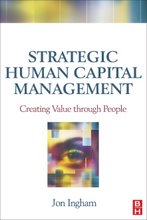
I am the author of ‘Strategic Human Capital Management: Creating Value through People’ and also blog about human capital related issues.  I have extensive experience in supporting organisations to develop human capital management strategies which is supported by 20 years experience of working in engineering, IT, change management and HR (working as a consultant for major consultancies such as Accenture, Buck (ACS) and Ernst & Young, and also acting as an international HR Director).  I combine this focus and experience with HCI’s latest research and insight to deliver a truly valuable experience.


Contact me at info [at] strategic [dash] hcm [dot] com

Or call +44 1344 420 512.


Monday, 9 November 2009

IES Human capital measurement


SHRR HC measurement page   The current issue of Strategic HR Review tackles the broad theme of human capital management by focusing on different perspectives including thes use of metrics and how to realistically measure return on investment in human capital.

In ‘Human capital measurement: an approach that works’, Dilys Robinson of the Institute of Employment Studies describes a hierarchy triangle ‘that constitute a realistic and workable approach to measuring human capital’.  A case study shows how the Civil Aviation Authority, which pioneered the approach, successfully implemented the steps and improved the image of HR:

“CAA decided that the resulting measures for human capital should be arranged into a virtual ‘hierarchy of needs’ with the basic workforce data leading onto measures of efficiency measured through operational data, leading to measures of effectiveness or outcomes, with the ultimate pinnacle of measuring organizational performance through linking the other levels of measurement to CAA strategic performance.”


It’s a decent attempt, but I don’t think it’s anywhere near as coherent as my own framework, based upon the value triangle and value chain.

Most of my criticisms are similar to those I provided for John Boudreau’s ‘Beyond HR’, so rather than listing these again, I’ll direct you to that post: Which Direction Beyond HR?.


I’ll be attending InfoHRM’s European conference on Wednesday and Thursday, so I’ll be providing some more posts on HR measurement during the rest of the week too.


Also see these other posts on the HCM edition of Strategic HR Review:


  • Consulting - Research - Speaking  - Training -  Writing
  • Strategy  -  Talent  -  Engagement  -  Change and OD
  • Contact  me to  create more  value for  your business
  • jon  [dot] ingham [at] strategic [dash] hcm [dot] com

    .

  • Sunday, 8 November 2009

    HR’s role in Enterprise 2.0


        I’ve recently posted a review of Andrew McAfee’s new book, Enterprise 2.0 on my Social Advantage blog.

    McAfee notes that in many organisations, their legal and human resources departments have advised against pursuing Enterprise 2.0.

    I guess this isn’t too surprising given all the ongoing negative reporting.  Eg from Morse:

    57% of employees use Twitter or some other form of social networking during the working day for personal use. And on average these users spend 40 minutes (59 minutes according to their colleagues) each week using these sites:

    “Despite a third of office workers admitting that they had seen sensitive information posted on social networks, 84% felt that it should be up to them as to what they post online. This indicates that guidelines are either being poorly communicated or are not strict enough.”


    I must admit I’ve always tended to believe that 1) social media provides such a benefit that will outweigh any risks, and 2) HR should use any information that’s available to it (rather than equating this with ‘going through someone’s drawers’).

    However, I guess something about ‘getting naked in the office’ isn’t the first thing I want people to see when they Google me!

    Oh, well!


  • Consulting - Research - Speaking  - Training -  Writing
  • Strategy  -  Talent  -  Engagement  -  Change and OD
  • Contact  me to  create more  value for  your business
  • jon  [dot] ingham [at] strategic [dash] hcm [dot] com

    .

  • Saturday, 7 November 2009

    Nigel Paine on Learning & Development trends


    Lego brick   So after having considered the context and the technology, Nigel Paine (previously Head of Learning at the BBC and provider of a case study for my HCM book) took us through his thoughts on trends in learning and development.


    Firstly, this is important – see these stats on the role of training and development within employer branding:


    Linkedin stats


    Secondly, it’s changing:

    • From courses to environments
    • From knowledge delivered to knowledge shared
    • From control to free flow
    • From individuals to communities
    • From skills to values and culture.


    Martin Bean, Vice Chairman at the Open University talks about the following four aspects of learning environments which will need to change to reflect the future:


    Martin Bean


    We need to encourage people to use what’s available free on the web, and to generate their own user driven content.


    The Good Enough revolution

    Other things include the good enough revolution – realising that things (like this post! – or a Lego brick) don’t need to be perfect if it allows us to achieve velocity.

    Nigel’s example was Skype which isn’t perfect but is growing faster than any other telecoms firm is carried 10% of the world’s telecoms traffic last year.


    From shaping to framing

    We need to move from shaping learning solutions to framing the learning proposition.  Not telling the company or learners what to do, but arguing the case for where learning fits in.

    It’s about leading the debate, defining reality.


    Changing attitudes

    One of the questions for the panel that Nigel was on and I was chairing was about increasing the penetration rate of e-learning usage.  After talking about infrastructure challenges, I asked all panel members about dealing with attitudinal challenges too (referring back to a question I’d had about intranet usage).  Nigel made these three suggestions:

    • Ensure there is a clear architecture vs inconsistency in applications
    • Bring useful information to the top (when he started at the BBC their intranet pages were all about departments’ mission and values etc.  They changed this to focus on what people needed to do etc)
    • Ensure all information is on, and only on, the intranet – ensuring some excitement (re breaking news etc).


    See also my post on Clive Shepherd’s and Donald Clark’s sessions on Learning and Development trends at ITU in Budva.

    Or for more trends in learning and development: http://strategic-hcm.blogspot.com/search/label/Learning 


  • Consulting - Research - Speaking  - Training -  Writing
  • Strategy  -  Talent  -  Engagement  -  Change and OD
  • Contact  me to  create more  value for  your business
  • jon  [dot] ingham [at] strategic [dash] hcm [dot] com

    .

  • Friday, 6 November 2009

    Use of the Internet in the Arab States


       My next two posts continue the review of the ITU Talent Management conference from the beginning of this week.

    See also:

    Talent management in the Arab States

    Nationalisation at Mobily, Saudi Arabia


    After having reviewed the general context for talent management in the Arabic States, ie the role of nationalisation, we moved on to consider the opportunities and impacts available from changes in technology.

    Hadeel Sakkijha, Senior Research Analyst at Arab Advisors Group in Jordan gave use an overview of the Arab world’s Internet market landscape, including some primary research findings on the online use patterns in Jordan, UAE, Saudi Arabia, Egypt, Tunisia, and Bahrain.

    I thought these two slides were particularly useful in helping HR and L&D practitioners in the region consider opportunities for e-learning, social learning etc (click through to review):


    Interenet penetration


    Broadband penetration


    Photo credits: Telecom Egypt

    Slides: Arab Advisors Group


  • Consulting - Research - Speaking  - Training -  Writing
  • Strategy  -  Talent  -  Engagement  -  Change and OD
  • Contact  me to  create more  value for  your business
  • jon  [dot] ingham [at] strategic [dash] hcm [dot] com

    .

  • Thursday, 5 November 2009

    Social HR and the CIPD Annual Conference 2009


       Referring to the wisdom of the crowds, McDonalds People SVP, David Fairhurst writes in his months’ HR Magazine that this year’s CIPD annual conference will be a place where smart decisions about the future of our profession will be collectively reached.

    Well, maybe.  At least one thing’s going to be more stacked in our favour.

    The last time I attended the CIPD conference, two years ago, I blogged:

    “The CIPD conference always provides a great input of knowledge. But it is an equally useful social forum as well, enabling participants to catch up with old friends, meet new people, and discuss ideas and issues with other delegates. As became clear from the sessions I attended, the social side of business, supported by the use of social media, is becoming increasingly important too.


    Perhaps next year, the conference will make use of social media to engage even more people in the conference?”


    Well, I don’t think they did, but this year may be a little different?  Steve Bridger at CIPD Communities is going to be organising Communities Live sessions, and Natalie Alexandrou at CIPD Events is organising a tweet-up (sign up here).  I wonder if they’ll have a Twitter Tracker up on the slides as well?

    I don’t know if any of this will allow us to make quite as much impact as at SHRM’s conference this year, but it’s all movement in the right direction.


  • Consulting - Research - Speaking  - Training -  Writing
  • Strategy  -  Talent  -  Engagement  -  Change and OD
  • Contact  me to  create more  value for  your business
  • jon  [dot] ingham [at] strategic [dash] hcm [dot] com

    .

  • Wednesday, 4 November 2009

    Andrew Mayo on Human capital management


     eye   The current issue of Strategic HR Review tackles the broad theme of human capital management.  In one article, Andrew Mayo describes his thoughts on the differences between HCM and Human resource management (see my recent post on his thoughts about human resource measurement too).

    HRM is about treating people as resources:

    “People are resources and represent significant costs, and they have to be managed and administered. HRM is the platform of policies, processes and procedures that enable that to happen. The effectiveness of all these activities, and their efficiency of delivery, need measuring – with standards and targets and regular reporting. But it is a measurement framework that should be separated from HC measures – and too often, “HR metrics” is a basket in which they are all mixed up.”


    HCM however is about how we look at people as value-creating assets:

    “For me, it is very close to talent management. Many organizations have a very restricted and exclusive view of talent, confining it to “high potentials” – which are typically 1 per cent or so of an organization’s people. I would define talent as “those people directly in the line of value creation to one or more stakeholders, and who possess a high level of the relevant knowledge or skills needed.” This will include some quite humble people on the front line of the organization, and is a radically different way of looking at people compared to the systematized and hierarchical approaches of HRM.

    The first discipline of HCM is identifying who these assets are. They may be defined by role, or as exceptional individuals…

    Our next task is to engage them and retain them. Do our HRM systems allow enough flexibility to meet the financial and non-financial aspirations of our essential assets?

    We also want to grow their potential – some will just be great performers, but others will be able to take higher responsibility in the future.

    Finally, we need a culture that recognizes talent and the fact that it may be treated differently...”


    Although I think HCM can go much further than this, I agree with much of what Mayo writes, particularly his first paragraph above (also see my presentation at ITU) .  And I think he makes an important point in stressing that HCM isn’t a replacement for HRM:

    “We need both HRM and HCM. They are different mindsets and many traditional HR professionals find a human capital approach challenging. But it is at the heart of what an organization is there for – nothing could be more strategic.”


    Mayo also writes that he doesn’t think there is a widely accepted and definitive definition of HCM.  I also shied away from giving one when I wrote my book.  But I think it’s time.  Look out for my views on HCM vs HRM later this month.


    Also see my Strategic HR Review article on human and social capital.


    PS, I think the two eyes from our book covers go rather nicely together, don’t you think?


  • Consulting - Research - Speaking  - Training -  Writing
  • Strategy  -  Talent  -  Engagement  -  Change and OD
  • Contact  me to  create more  value for  your business
  • jon  [dot] ingham [at] strategic [dash] hcm [dot] com

    .

  • Tuesday, 3 November 2009

    Nationalisation at Mobily, Saudi Arabia


    Some of the sessions at the ITU conference provided a context for thinking about talent management challenges within the Arab States,  My favourite presentation was a case study on nationalisation from Dr Fahad Alzahrain from Mobily.

    To an extent, I found this particularly interesting as I already knew quite a log about Mobily from sitting with some of their managers at Etisalat Academy’s Middle East HR Conference earlier this year.

    But it’s also, because I agree with Alzahrain that nationalisation very important.  As he noted, it’s a compulsory requirement by law, and it’s a long-term investment.  It’s also a good example of a process that is often badly broken in many Arabic firms.

    I first became acquainted with the issue of nationalisation in a talk by Hani Hirzallah from Barclays when I presented at Fleming Gulf’s HR Strategies conference in Dubai last year.  And since then, I’ve discussed it with many clients and contacts.  And I do agree with Fahad that those companies who treat is as a bit of a numbers game, and play the game, rather than something that’s important (eg by outsourcing some of their expat staff, employing people who never show up for work, etc) are missing a trick.  Alzahrain summed it up nicely: “Since you have to do it, do it right!

    So what jeopordises it?  According to Alzahrain this includes:

    • Wrong perception – thinking in stereotypes – a need to educate yourself
    • Absence of good will – manouvering to avoid the governments’ requirements
    • Lack of pro-activity: do not wait for those young people to come after you
    • Influential people’s satisfaction – a small amount of nepotistic pressure gives it a bad reputation.


    Alzahrain suggests there is a ROI to :

    1. Natural Retention: Most of (if not all) Saudis prefer to work in their home country.
    2. Cost Reduction: On the long run, they cost a lot less than Non-nationals.
    3. Head Hunters: They will be your best sourcing agency since they are live examples.


    Alzahrain also challenged me on the value of theory vs practice.  But if Arabic companies are going to make a success of nationalisation, they need a well thought through strategy, and then they need to implement it well.


    Photo credits: Telecom Egypt


  • Consulting - Research - Speaking  - Training -  Writing
  • Strategy  -  Talent  -  Engagement  -  Change and OD
  • Contact  me to  create more  value for  your business
  • jon  [dot] ingham [at] strategic [dash] hcm [dot] com

    .

  • Monday, 2 November 2009

    Talent management in the Arab States


    ITU Capability Development conference at Telecom Egypt, Cairo

    I’ve been co-chairing and presenting at the International Telecommunication’s Capability Development event for the Arab States held in Cairo over the last couple of days.  One of many highlights (I missed the Nile cruise) was Telecom Egypt’s museum of old telecom products:


    I think the other interesting aspect was (as per Budva), the mix of people from government, regulators, HR, L&D, e-learning, technology etc.


    I opened the 1st day of the conference (after the various greetings and introductions) with a session on key challenges for talent managers.


    I’ll post on some of the highlights of the other sessions (for me) shortly.


    Photo credits: Telecom Egypt / Jon Ingham


  • Consulting - Research - Speaking  - Training -  Writing
  • Strategy  -  Talent  -  Engagement  -  Change and OD
  • Contact  me to  create more  value for  your business
  • jon  [dot] ingham [at] strategic [dash] hcm [dot] com

    .

  • Sunday, 1 November 2009

    Guest post on Human Race Horses


    Human race horses   I’m guest posting on metrics, trends, and the future of Human Resources at Michael VanDervort’s The Human Race Horses blog:

    Over There: Jon Ingham Conquers the Globe!

    “I am really excited to be able to provide a guest post from one of m favorite writers in the Human Capital space — Jon Ingham from the United Kingdom…

    Probably more than anyone else I know, Jon is capable of bringing a global perspective to his writing in the HR space…”


    See Mike’s blog for more information on what I had to say.


  • Consulting - Research - Speaking  - Training -  Writing
  • Strategy  -  Talent  -  Engagement  -  Change and OD
  • Contact  me to  create more  value for  your business
  • jon  [dot] ingham [at] strategic [dash] hcm [dot] com

    .

  •